How to Tell If Your System Is Full of Sludge
There’s a selected more or less horrific day you might think coming beforehand something breaks. The radiators take longer than average to hot up. One or two rooms are chilly however the boiler is firing. The pump sounds the several, slightly louder or extra strained. Then the approach starts off behaving love it’s worn out, now not faulty. When that happens in older properties distinctly, one culprit rises persistently: sludge.
Sludge will not be one elementary “thing” floating round in the pipework. It’s by and large a mix of first-class particles, corrosion items, magnetite, and sediment that settle wherein water movement slows down. Central heating methods were in no way supposed to be open-ended choice bins for many years of damage. Once ample fabric builds up, it doesn’t just scale down efficiency. It increases pressure on parts and will make leaks, noisy movement, and choppy heating more likely.
Below is how I tell whether a formula is full of sludge, what the clues imply, and learn how to have faith in powerflushing versus other innovations. I’ll also contact on what to anticipate in the event you ever turn out to be calling in a expert for whatever thing like Powerflush Benfleet.
What “sludge” does to a heating system
Sludge tends to compile in low-stream places. That consists of radiator bottoms, corners of pipe runs, older valves, and in some layouts, round bends where momentum drops. Over time, the sediment layer thickens and starts offevolved behaving like a partial blockage. Water nevertheless movements, but it strikes less freely, and the warmer sections turn out doing more paintings for the similar heat output.
The purposeful outcomes are regular:
- Reduced warmness switch at radiators, because the sediment insulates the pipe partitions and might intrude with movement.
- Uneven temperatures throughout the manner, seeing that one side receives the float when a different starves.
- Higher boiler cycling and longer run times, considering the fact that the boiler is making an attempt to meet a thermostat that on no account sees the whole residence warm thoroughly.
- Noisy or “gurgly” move, principally on first warmness-up after the process has been off.
It’s worthy asserting this it appears that evidently: sludge is usually a symptom of wider points. If you've got commonly used air ingress, repeated upkeep, or poor process filling practices, you will feed corrosion and sediment sooner. If the device has been left untreated for years, sludge turns into more likely in spite of the fact that not anything is manifestly “incorrect” daily.
The early symptoms that you may spot with out tools
If you understand what to hear for, possible in general catch sludge patterns until now they become a full-blown malfunction.
Radiators that hot unevenly
A basic clue is that radiators warmness up in segments. You could get a properly 1/2 that warms promptly yet a bottom 1/2 that remains lukewarm. Or a unmarried radiator behaves love it’s trapped at the back of something, warming slowly notwithstanding neighbouring ones come on characteristically.
I’ve viewed tactics the place the quandary gave the impression to “move” as settings converted. Turn the thermostat down and lower back up, substitute timers, or bump the boiler to a higher temperature, and you observe a few radiators reply when others barely shift. That’s aas a rule float similar, and sludge should be the rationale stream will become restrained in distinctive branches.
Long heat-up occasions and cussed chilly rooms
When sludge thickens, the manner’s means to push heated water around is diminished. That translates into radiators taking longer to reach temperature. Cold rooms can persist regardless of the boiler operating, for the reason that the stream they place confidence in is lowered or abnormal.
This isn't like a practical thermostat or zoning concern. If your heat is inconsistent across rooms, fantastically throughout related pipe runs and radiators, sludge moves up the suspicion list.
Noisy movement, specifically “knocking” or gurgling
Sediment and constrained stream could make pumps work more difficult and might create turbulence or wallet in which water behaves unevenly. You would notice a pump that feels love it has to push tougher, or listen a rumble or gurgle as heat cycles begin up.
Some workers describe it because the radiators “simmering.” Others realize it simply when the device first fires after being off for some time. That trend makes sense if the sludge settles while water pass stops.
Frequent boiler cycling
If the boiler retains firing and stopping greater than you assume, it could actually be caused by many causes, but sludge can make a contribution. The boiler is perhaps heating water that not at all effectually reaches the radiators, so temperature comments becomes misleading. The manner might also present longer cycle times, relying on boiler classification and manipulate logic.
Cycling will become greater disturbing if you have already got a house that feels lower than-heated. If you are turning the heating up and still no longer seeing outcomes, sludge is really worth investigating rather than blaming the boiler first.
The clues from formulation tension and repairs history
Sludge and corrosion routinely develop in combination. That way the story instructed via renovation shall be simply as telling as the warning signs you think.
If your technique has required repeated interventions, like radiator replacements, pump swaps, or “small” maintenance that involve draining parts of the circuit, it will increase the threat of particles introduction or activation. Any time you drain and top off, you’re including refreshing oxygen to the components water, which will speed up corrosion and produce greater great textile.

Pressure behaviour can supply hints too. Sludge itself doesn’t at once create power jumps the method a failed expansion vessel could, but it would make a contribution to situations where the gadget circulates poorly and air receives trapped otherwise. If you often top up, exceedingly more than you need to, it’s a sign that something is enabling water to depart the device. That missing water and repeated stock up is an surroundings the place sludge and corrosion can thrive.
Quick sanity test on height-ups
If you desire to ideal up the gadget pretty much, don’t suppose sludge is the in simple terms hassle. In apply, universal topping-up is mostly a leak, an over-pressurising keep watch over worry, or an expansion vessel hindrance. Sludge can nevertheless be existing, but the precedence is looking why the formulation water stability alterations.
A few practical checks you could possibly do at home
You can be trained an awful lot devoid of dismantling the rest, however you needs to keep riskless. Hot water and chemicals are precise disadvantages, and when you are uncertain, it’s stronger to involve a certified heating engineer.
1) Feel the pipes and radiator glide paths (moderately)
After the approach has been going for walks lengthy ample to determine pass, moderately contact the radiator pipes and the radiator itself, simply by a warm-resistant textile or waiting until eventually you could believe temperature distinctions virtually. You are usually not in search of perfection; you’re looking for a trend.
When sludge restricts movement, you primarily see temperature modifications that don’t event radiator length or position. One department may additionally reside cooler even though others get warm effectively.
A key point: in case your boiler is install in a way that factors short cycles, you may not get long enough run time to look a reliable temperature development. If you most effective get a few minutes before the boiler stops, the attempt turns into much less good.
2) Check for repeated balancing issues
If you continually regulate lockshield valves to get a room to heat up, and those modifications look to “put on off” through the years, sludge may be exchanging the fine drift course. Over weeks or months, sediment layers shift and drift resistance adjustments. That makes satisfactory balancing much less steady than you possibly can anticipate.
Balancing struggles are also commonly used wherein radiators have partly blocked valves. Sludge can also be the underlying reason why valves collect particles.
three) Look for “bottoms staying chilly”
This is the radiator edition of an asymmetric heating clue. If the radiator bottom stays rather cool although the most sensible warms, it's possible you'll Power flush Benfleet have:
- trapped air
- move restriction
- sludge settling near the base feed
- or a valve issue
It things in which the cold sector sits. Trapped air as a rule behaves differently, and bleeding can in some cases guide. If you bleed routinely and the symptom returns easily, sludge turns into more doable.
When it’s extra than sludge: the differential diagnosis
Not each “sluggish warmness” subject is sludge. Some are air, some are pump or valve failures, some are pipe sizing or approach design complications, and others contain boiler settings. If you suppose sludge without checking, you could waste payment or turn out to be with an incomplete restore.
Here are a number of prevalent lookalikes I be aware of:
- Sluggish or uneven heating after bleeding can still level to sludge, however additionally to defective valves or a circulation factor.
- A single radiator that on no account warms can be remoted blockage at that radiator, a sticking valve, or an internal element within the radiator itself.
- Whole-machine poor performance with pump noise and average temperature concerns can still be sludge, however can also be pump wear, mistaken boiler settings, or mistaken components balancing.
- Leaks and fixed topping up point to water loss. Sludge should be current, however the leak is a separate main issue.
The “tell” is repeatedly trend and patience. Sludge tends to create repeatable, machine-large behaviour that doesn’t clear up via minor alterations alone.
What a seasoned inspect appears like (and what you may still ask)
A respectable engineer will now not simply bet. They should still accumulate proof: temperature variations, run times, sound modifications, and ideally affirm debris phases.
The maximum convincing processes rely on machine get admission to and apparatus. In many cases, a able contractor might be capable of assess sludge by:
- beginning a drain level and analyzing what comes out
- checking for debris at strainers or machine filters
- measuring temperature drop throughout ingredients to perceive go with the flow restrictions
- acting a visual inspection of current filters or magnetite capture structures if present
If you end up bearing in mind Powerflush Benfleet or any related service, the contractor may want to be inclined to provide an explanation for what they advise to do and the way they're going to assess that the approach is truely being wiped clean, not just “hit with water and hope.”
Questions that look after you from vague promises
You can stay this fundamental, however ask it really. A sludge limitation is luxurious whilst carried out badly, so that you would like clarity on job, effect, and protection.
- What proof do you've got you have got that sludge is present in this components, and where would it not seemingly assemble?
- What cleansing means do you propose, and why is it correct for my pipework and radiators?
- How will you guard the boiler, valves, and different accessories in the time of the strategy?
- What will you do about debris disposal, and how can you test the flush has progressed go with the flow?
- After cleaning, how do you ensure just right inhibitor dosing and ongoing coverage?
If you get solutions which might be sure yet non-selected, that’s a red flag. “We’ll see how it goes” will be proper for some uncertainties, but you must nevertheless count on a plan.
Why powerflushing typically becomes necessary
Powerflushing is occasionally discussed as a brute-pressure answer, but the truly reason why it’s used is that sediment can changed into stubborn. With satisfactory time, particles can compact and adhere to internal surfaces. Gentle cleaning in certain cases is helping, but in heavily infected systems, it is able to no longer shift the drapery in which it subjects.
A sensible purpose to think of powerflushing is whilst signs and symptoms line up with circulate limit and functional fixes fail. Another purpose is conserving add-ons. Pumps, warmth exchangers, and valves can go through when move is restrained or when corrosion merchandise proceed to stream.
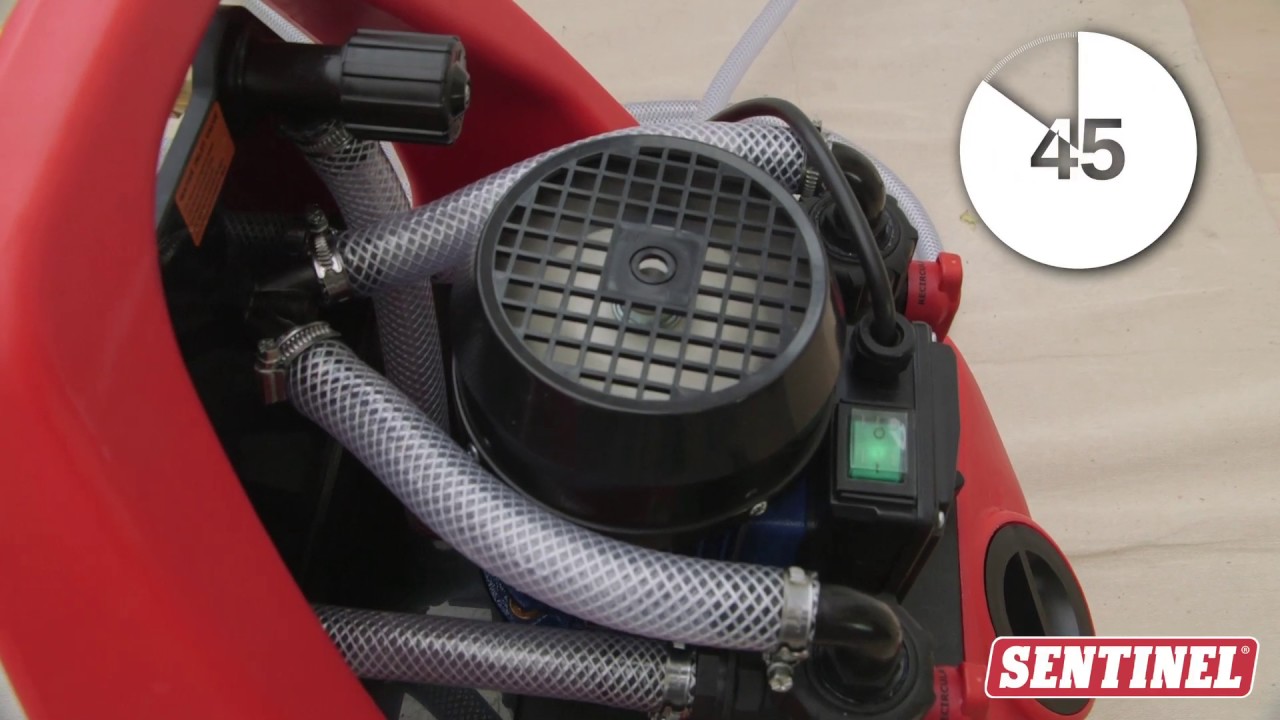
Still, powerflushing is not very a normal restore. There are alternate-offs and area situations.
The alternate-offs humans don’t regularly discuss about
Powerflushing may well be productive, however it consists of demanding the machine. That can dislodge debris that blocks in other places, at the very least temporarily. It additionally requires cautious dealing with of chemical cleaners, water waste, and aftercare inhibitor dosing.
In older platforms with corroded materials, there's additionally a probability that disturbed particles or chemical publicity might exhibit a vulnerable joint or a local that was once already on the brink. That doesn’t imply powerflushing is a mistake, however it does mean you needs to make a choice a contractor who understands risk control and who won’t treat each property the equal.
Edge cases: whilst sludge cleansing might possibly be harder
Some procedures are hard to refreshing appropriately, now not considering that the work is not possible, yet as a result of the design or fabrics complicate it. Examples come with:

- problematic pipe layouts with varied branches and coffee-pass zones
- approaches with thousands of microbore or partly obstructed pipe sections
- radiators with inner circumstances that make sediment removal slower
A capable engineer should speak about these realities upfront, which include what “achievement” looks like and how you’ll measure it.
After the cleansing: the part that determines no matter if sludge returns
Even in case you smooth a machine utterly, sludge can come back. The difference between a one-off “restoration” and a protracted-term advantage is inhibitor dosing and repairs conduct.
A sludge-unfastened manner within the actual global is mainly secure from recent corrosion merchandise. That skill:
- via the excellent inhibitor for the equipment type
- preserving dosing up to date
- fighting oxygen ingress by way of sustaining best suited process stress and avoiding useless draining
- ensuring trapped air is controlled, not left to circulate
If you've gotten a manner that has been often tired, or one in which air always enters, sludge becomes a habitual hassle. Cleaning is simply the reset button, now not the total resolution.
How that you could track progress until now and after
You don’t need professional resources to observe improvement. You want consistent remark.
Before any intervention, pay attention to:
- how lengthy it takes for the foremost radiators to succeed in regular heat
- which rooms live cooler than expected
- whether you listen pump noise or gurgling on start out-up
- no matter if you steadily accurate up the system
After cleansing, count on advancements that stick with machine physics. Radiators warm more flippantly, the system reaches goal temperatures quicker, and noise reduces. If those transformations do not show up, it shows both sludge wasn’t the foremost cause or there’s power blockage or a separate fault.
If you already have filters or strainers, verify them in line with the engineer’s tips. A procedure that improves however nevertheless produces debris in most cases wants aftercare and appropriate inhibitor dosing.
A lived example of the way the symptoms fit
A few years lower back, I visited a estate wherein the proprietor defined the related frustration: “It’s now not chilly, yet it’s certainly not surprisingly good.” The boiler fired, radiators bought warm, but the apartment felt rather underpowered. Two radiators notably stayed especially cooler. The pump sounded louder in the time of warmness-up.
We checked pipe temperatures after a decent run time. The deliver pipe to the cooler radiators warmed, but the radiator mass did not come up flippantly. The engineer additionally discovered proof in a filter factor, not sufficient to show sludge on my own, but satisfactory to improve the suspicion.
A powerflushing plan become selected given that the signs and symptoms had been repeatable and due to the fact the formula had a heritage of intermittent renovation and topping-up. After cleaning and inhibitor dosing, the radiators warmed extra uniformly, and the manner reached temperature quicker on each one call for warmth. The pump noise diminished, no longer quickly, yet over the following couple of cycles as movement stabilised. The owner additionally noticed fewer “wonderful-tuning” lockshield changes considering the fact that the device behaviour stopped replacing from week to week.
The key lesson wasn’t that powerflushing changed into magic. It labored because it matched the trend: restricted movement, choppy warm, and particles facts pointing to sludge instead of a one-off fault.
Practical protection and determination-making tips
If you believe sludge, save your selections grounded in observable behaviour.
First, steer clear of turning the heating up as your only diagnostic. Higher glide temperature can masks troubles briefly while making the components run warmer than valuable, that may speed up corrosion in some eventualities.
Second, don’t retailer bleeding radiators always with out considering why they avert desiring attention. Air can come from machine filling subject matters, leaks, or valve disorders. Sludge may also entice air and store reintroducing it into the wrong puts.
Third, in case you’re taking into account a specialist like Powerflush Benfleet, decide on any individual who can discuss you by verification and aftercare. The most well known contractor will make you believe much less uncertain, now not more depending on their “we’ll see” frame of mind.
Finally, recall that sludge is frequently section of a bigger tale. If your method has been left unprotected in opposition to corrosion, sludge will now not be the basically drawback lengthy-time period.
When you may still act faster instead of later
If sludge is the challenge, delaying can turn an efficiency complaint into a formula overall healthiness predicament. Pay cognizance to the aggregate of signs and symptoms instead of any single clue.
Act faster if:
- radiators are warming much less nicely over time
- you observe greater pump noise or worse movement each one season
- you to find routine particles in filters or at drain points
- you commonly excellent up the system
- boiler biking becomes more usual devoid of a clean regulate explanation
Even if the whole thing still works, sludge can payment you alleviation and dollars. More importantly, it could actually accelerate wear in movement add-ons and might make long run maintenance extra messy due to the fact particles spreads by way of the machine.
What to do next
If you’re trying to decide regardless of whether your device is full of sludge, begin by means of looking at patterns you could reproduce. Look for choppy radiator heating, power bloodless sections, noisy flow, and explainable variations in hot-up time. Then, bring together context from formulation historical past, peculiarly draining and topping-up frequency.
If the signs line up and the process has a history consistent with corrosion and particles, it’s not pricey to ebook a suited evaluate. A superb engineer could be capable of connect your observations to most probably glide regulations and to a realistic cleaning procedure. From there, powerflushing, centred filter cleansing, or different ideas may well be in comparison with transparent expectancies.
Sludge isn’t necessarily the reply. But while your technique behaves find it irresistible’s struggling to move warmth frivolously, sludge is repeatedly the explanation why, and it’s more often than not treatable.